





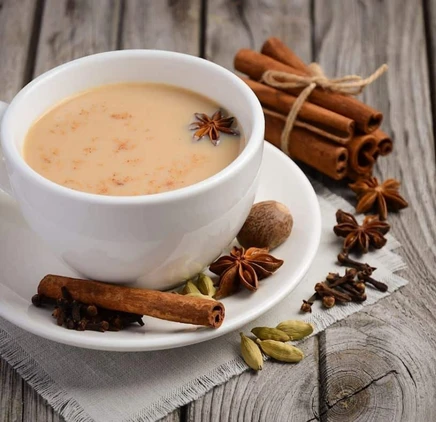



You order a chai latte at a café downtown. It arrives sweet, thin, and tasting of cinnamon syrup, with the tea somewhere far in the background. Six dollars. You drink it anyway.
A cup of chai at home costs you around forty cents and eight minutes on the stove. Most people still end up with warm spiced milk. The gap comes down to six decisions in the pot, and the first three happen before the milk goes anywhere near it.
Start in water, not milk
Half the recipes online tell you to heat milk and drop in a tea bag. That gives you a milk drink with a rumour of tea in it.
Tea leaves need water at a rolling boil to open up. Boiling water pulls out the tannins, the colour, and the bite that makes chai taste like chai. Milk protein grabs those tannins and mutes them. Add tea to milk and the leaves never get their chance.
Water first. Boil it hard, add your tea, give it two minutes, then pour in the milk.
For a single cup, use 120 ml water and 120 ml milk. Whole milk if you have it. Oat milk holds up better than almond, which splits once you boil it long enough.
Use more tea than feels reasonable
One tea bag holds about two grams of fannings, the dust left after the good leaf gets sorted out. That amount works for a cup of black tea with nothing in it. It vanishes the second you add 120 ml of milk.
For chai, use a heaped teaspoon of loose CTC per cup, closer to three grams. CTC stands for crush, tear, curl: the small pellet-shaped leaf that most Indian and Pakistani households buy. It brews fast, brews hard, and stands up to milk and sugar. Darjeeling and delicate orthodox leaf make beautiful tea and terrible chai.
You know you have enough in the pot when the tea, before the milk, sits close to black.
Crack your spices, skip the powder
Pre-ground chai masala loses its oils within a few weeks of grinding. By the time the jar reaches your kitchen, most of the aroma has already left the building.
Whole spices, cracked open with the back of a spoon or the base of a glass, release their oils in the pot while the chai cooks. For two cups:
- 3 green cardamom pods, cracked
- 1 short piece of cinnamon or cassia bark
- 2 cloves
- A coin of fresh ginger, smashed flat
- 2 black peppercorns if you want heat
Spices go into the water at the very start, before the tea. Ginger goes in with them. Ginger added at the end tastes raw and sharp instead of warm.
Leave out the nutmeg. Leave out the star anise. Both take over the whole pot.
Let it boil over
The second boil separates home chai from café chai.
Once the milk goes in, keep the heat up and watch the pot climb. When the foam reaches the rim, lift the pot off the heat for a second, let it drop, and set it back down. Do this two or three times.
Each boil concentrates the liquid, thickens the milk, and drives the spice deeper into the tea. Chai that has climbed the pot three times tastes rounder and pours darker than chai you left at a polite simmer for the same nine minutes.
Total stove time: seven to nine minutes. Stop before five and you will taste the shortcut.
Sugar belongs in the boil
Sugar stirred into a finished cup sits on top of everything. Sugar boiled with the chai changes how the milk behaves and how the spice lands on your tongue.
Two teaspoons per cup runs standard across most of South Asia. Start at one and a half if that number worries you. Add it once the milk is in, before the first boil-over.
Strain from a height
Pour through a fine mesh strainer and hold the pot high while you do it. The stream picks up air on the way down, which builds a light foam across the surface and drops the temperature to something you can drink now instead of in four minutes.
Every chai wallah in Karachi and Delhi pours this way, and none of them are performing for you. Aerated chai tastes smoother.
The troubleshooting list
Work backwards through this when a cup comes out wrong.
Too weak? More tea, or a longer boil before the milk goes in.
Too milky? Shift the ratio toward water.
Spice sitting flat? Your spices came pre-ground, or you added them after the milk.
Bitter? You boiled the tea in water past the two-minute mark. Pull it earlier.
Thin? You never let it climb.
One pot, a hundred versions
Every household in South Asia makes chai differently, and the arguments get heated. Kashmiri families turn it pink with baking soda and salt. Hyderabadi chai runs sweeter and thicker. Plenty of homes never touch cardamom at all.
Start with the method above. Then change one variable a week until the cup in your hand tastes like the one you grew up with.
We built The Pyali Chai Co. around this exact cup. Our blends are sourced for the stovetop method above: strong enough for milk, quick enough for a Tuesday morning. Browse them at thepyalichai.co, or come drink one we have already made for you at our chai stop inside Durbar Indian Cuisine in Toronto.